
Glasgow’s been sort of holding the spotlight for the past week on Commonwealth sport, and then this weekend sort of seals the deal, you know. The 2026 Commonwealth Games run July 23 through August 2, bringing competitors from 74 Commonwealth Games Associations over to Scotland. And this time around, the program is intentionally more compact: 10 sports, 215 medal events, four venues tucked inside an eight-mile corridor, plus six sports that include an integrated Para competition.
Even with the smaller menu, Glasgow 2026 still doesn’t feel small. It just funnels everything toward a focused set of disciplines: athletics, swimming, boxing, cycling, weightlifting, gymnastics, judo, bowls, 3×3 basketball, and netball. For fans in India, there’s another practical reason to tune in too: a 126-member Indian contingent has arrived in Glasgow, with a mix of proven champions and newer contenders. So the Games turn into a pretty serious international yardstick, not only a local highlight.
Since the Games finish on Sunday, August 2, this final weekend gives you one last window to track medal races, rising performers, and that unmistakable buzz that only a major multi-sport event can really bring.
Athletics Brings Some Of The Biggest Names
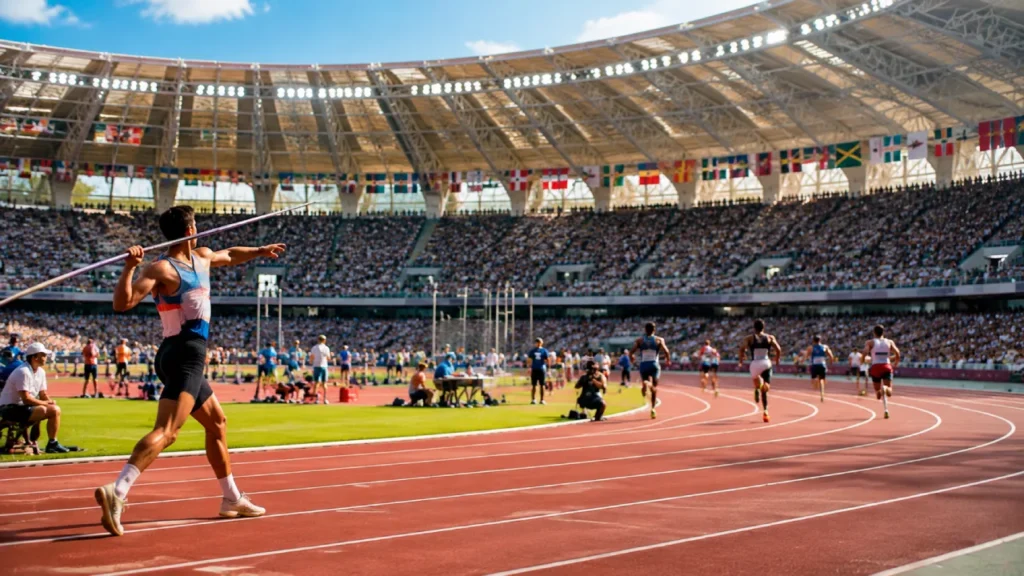
Track and field still seems like one of the natural centerpieces of the Commonwealth Games, mixing global stars with athletes who could be seeing their first real international breakthrough, at least in this sort of spotlight. India’s athletics group alone features 32 athletes, and also 43 athletics gold medals are on offer in Glasgow.
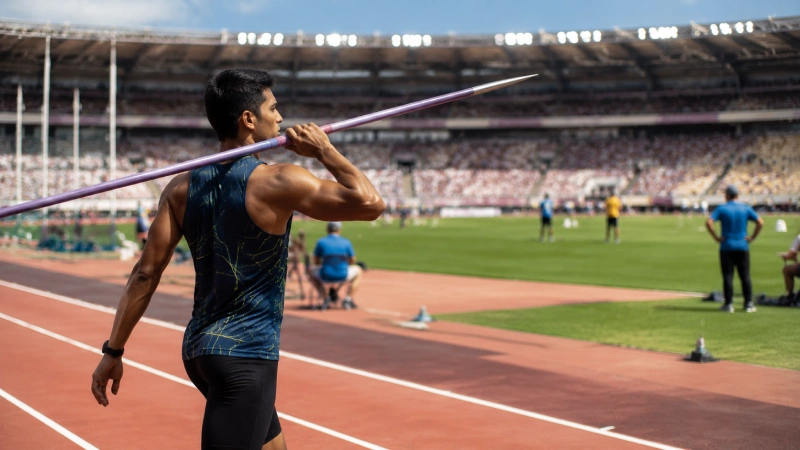
One of the more recognizable people to watch is Neeraj Chopra. India’s Olympic champion has once again made the men’s javelin one of the country’s most closely watched events. Chopra got through to the final alongside fellow Indians Rohit Yadav and Yash Vir Singh, so India ended up with three representatives in the medal contest.
The wider athletics schedule has also pulled in major international names to Glasgow. Before the Games began, Commonwealth Sport pointed to Saint Lucia’s Julien Alfred and Britain’s Dina Asher-Smith as among the main sprint attractions. Alfred came into Glasgow trying to build on her 100m silver from Birmingham 2022, while Asher-Smith arrived as the reigning European 200m champion.
These are the events that make athletics especially compelling: established champions might show up as favorites, but one race, or one throw, can basically write a brand new Commonwealth name.
India’s Field Athletes Are Worth Watching
Chopra might pull the biggest headlines, but India’s athletics push isn’t only about javelin; it goes further. Praveen Chithravel and Selva Prabhu made it into the men’s triple jump final, which gives Indian viewers another medal situation to watch pretty closely. What makes their progress feel extra important is that India’s growing ambitions in athletics aren’t just stacked in one event anymore, not like before.
Quarter-miler Rajesh Ramesh is also one of those names to keep an eye on for Glasgow 2026. The seasoned relay runner is set for his Commonwealth Games debut after he became a key part of India’s recent 4x400m efforts. For Indian sports fans who are used to cricket taking over the whole calendar, results in jumps, throws, and relays work like a quiet reminder of how much the country’s athletics scene has widened, a lot, really.
Mirabai Chanu Has Already Set the Standard
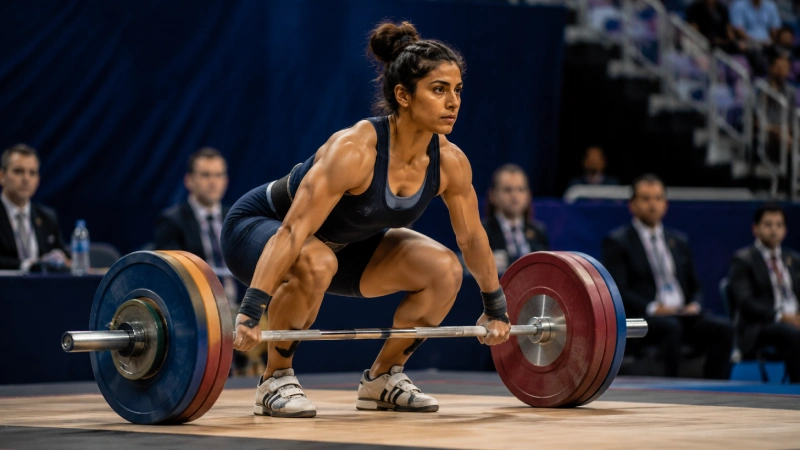
Some of the most gripping Glasgow stories from India are hard to top, especially Saikhom Mirabai Chanu’s. Chanu won India’s first gold medal at the Games in the women’s 48kg weightlifting competition on July 26. But even more than that, the win delivered her third Commonwealth Games gold in a row.
Her performance shows why weightlifting has long been one of the backbone sports of the Commonwealth Games for India. It’s a mix of technique, raw strength, and intense mental strain, you know, the kind where months of preparation can end up hinging on a few lifts done in a matter of minutes.
For casual viewers, that kind of straightforwardness makes weightlifting feel way more reachable than it should be. The goal is instantly clear, and every win or loss, at least in terms of rhythm, can reshuffle the standings, like right away. Chanu’s Glasgow outing already gave India’s campaign one of those defining episodes that people tend to remember.
Boxing Offers a Different Kind of Drama
If athletics brings speed, and weightlifting gives you controlled force, boxing steps in with tactical uncertainty. India has a handful of competitors trying to move through Glasgow’s boxing tournament. Among them, Sachin Siwach moved on from the men’s 60kg event after beating England’s opponent by split decision earlier during the Games.
Boxing works especially well in the closing stages of a multi-sport event because every bout carries immediate consequences. There aren’t any extended league runs, nor much space to recover weeks later. One hard round can swing an athlete’s entire tournament, even if nothing else looks different.
For viewers who do not normally follow amateur boxing, the Commonwealth Games are an easy entry point to the sport, and they also offer a chance to meet athletes before they turn into more familiar names on Olympic stages.
Para Sport Is Kind Of Part of the Main Story
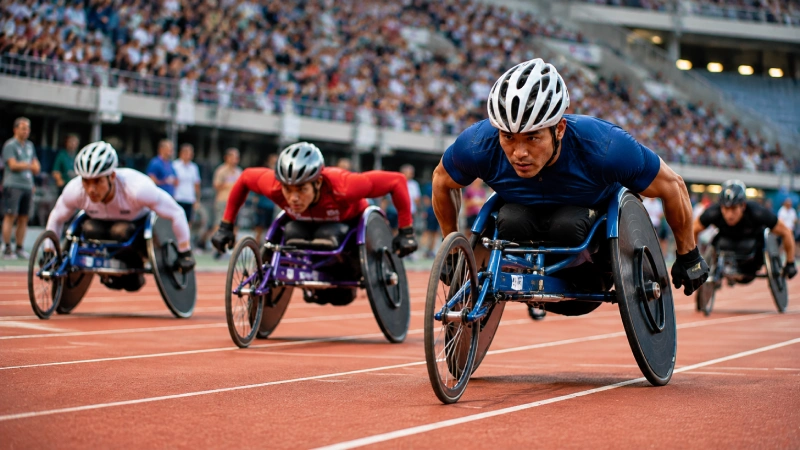
One of Glasgow 2026’s defining features is how Para sport is woven into the wider competition program, not sitting off on its own.
Six of the Games’ 10 sports have Para events: athletics, swimming, track cycling, weightlifting, bowls, and 3×3 basketball.
That setup matters because Para competition is framed as part of the central sporting program rather than as a fully separate thing.
And yes, India has also shown up through athletes in these contests.
Like Para-swimmer Swatik Patil, for instance, he qualified for the men’s 100m breaststroke SB9 final earlier in the Games after he finished fourth in his heat. For families watching the Commonwealth Games together, this integrated program also offers a broader view of what “elite” sporting performance looks like.
Netball, Cycling and 3×3 Basketball Bring a Fast-Paced Kind of Viewing
Not every standout Commonwealth moment is powered by a single big star. Netball has been a major Commonwealth sport for ages, especially for countries like Australia, New Zealand, England, and Jamaica. The speed, the passing, and the tactical motion all help make the final stages feel pretty gripping.
Even if someone barely follows the sport outside the Games, it still pulls you in.
Track cycling is almost a different planet. Races can be extraordinarily fast, and outcomes are sometimes decided by tiny fractions of a second, with tactics switching in the blink of an eye.
Then there’s 3×3 basketball, a compact version of the game built around short, high-intensity bursts. Its tempo makes it more welcoming to younger viewers and to people who are used to short-form sports entertainment.
Why the Final Weekend Is, Honestly, Worth Watching
The last weekend of a big multi-sport event has this sort of atmosphere that the first days can’t really copy. By then, medal tables have already settled, some breakthrough athletes have emerged, and national campaigns are starting to pick up their own little storylines. Australia, England, Canada, India, and New Zealand are usually among the Commonwealth’s most formidable sporting nations, while host Scotland went into Glasgow aiming to build on the 13 gold medals it won at Birmingham 2022.
Still, medals do not tell the whole story.
For younger athletes, Glasgow might be the moment that sets their international careers in motion. For well-known champions, it’s another chance to deepen sporting legacies. And for spectators, the final weekend is the payoff after more than a week of action, before the Games wrap up on August 2.
A Different Kind of Commonwealth Games
Glasgow 2026 feels a bit more streamlined than a few earlier editions. The whole event is focused on 10 sports and four venues, instead of constantly trying to expand the program.
So it becomes interesting not only because of the results but also because of its shape.
The Commonwealth Games themselves are changing, and Glasgow is basically showing how a smaller, more concentrated multi-sport show can still work. With Ahmedabad scheduled to host the centenary Commonwealth Games in 2030, the takeaways from Scotland may matter for what comes after.
For now, though, it’s all about the competition.
Why the Final Weekend Is, Honestly, Worth Watching
The last weekend of a big multi-sport event has this sort of atmosphere that the first days can’t really copy. By then, medal tables have already settled, some breakthrough athletes have emerged, and national campaigns are starting to pick up their own little storylines. Australia, England, Canada, India, and New Zealand are usually among the Commonwealth’s most formidable sporting nations, while host Scotland went into Glasgow aiming to build on the 13 gold medals it won at Birmingham 2022.
Still, medals do not tell the whole story.
For younger athletes, Glasgow might be the moment that sets their international careers in motion. For well-known champions, it’s another chance to deepen sporting legacies. And for spectators, the final weekend is the payoff after more than a week of action, before the Games wrap up on August 2.
A Different Kind of Commonwealth Games
Glasgow 2026 feels a bit more streamlined than a few earlier editions. The whole event is focused on 10 sports and four venues, instead of constantly trying to expand the program.
So it becomes interesting not only because of the results but also because of its shape.
The Commonwealth Games themselves are changing, and Glasgow is basically showing how a smaller, more concentrated multi-sport show can still work. With Ahmedabad scheduled to host the centenary Commonwealth Games in 2030, the takeaways from Scotland may matter for what comes after. For now, though, it’s all about the competition.
Conclusion
The final weekend of the Commonwealth Games 2026 gives a bit of everything— a blend of seasoned champions and newer, hungry competitors, plus individual showdowns and quick, shifting team sports— and feels familiar and surprising at the same time.
For Indian viewers, Neeraj Chopra and Team India’s athletics group are an easy reason to tune in to Glasgow, and Mirabai Chanu’s third Commonwealth gold in a row has already turned into one of the clearest standout narratives of this campaign. You don’t really need extra explanation when the story keeps delivering like that.
Beyond India, the Games also open a window into some of the Commonwealth’s leading athletes, while at the same time revealing rivals and sports that normally get far less spotlight for the rest of the year. In a way, it’s not just watching; it’s also finding.
Maybe that will end up being the biggest draw of spending a weekend at the Commonwealth Games. You don’t have to master every rule or remember every competitor in advance. Often the fun of a multi-sport festival is simply switching on one event “just because”, and then uncovering a fresh athlete, a new sport, or a sporting moment you’ll think about later.
With Glasgow 2026 wrapping up on August 2, there is still time for a few more nights of great action.