


Cricket can feel like those long stretches of pretty low effort, and then suddenly boom, fast bursts. A fielder may stand there, almost still, before sprinting to a boundary, while a batsman can go from standing to short repeated shuttle runs between the wickets in a moment. So it kind of misleads to think stamina is only the ability to keep running without stopping for ages. For cricket, stamina is more like: a cardiovascular base plus speed endurance, recovery ability, agility, and also repeated sprint power, resulting in requirements of proper cricket fitness drills.
Cricket fitness drills: Shuttle Runs
Shuttle runs are a pretty basic method to make your running more cricket related. Just place two markers about 15–20 metres apart. Sprint from one marker to the other, touch the line or the cone, turn quickly , and come back. Do several repetitions, then take a recovery pause. The continual accelerations, the slowing down, and the direction swaps are especially valuable because cricket seldom asks you to hold the same pace for a long stretch.
- Beginner: 4–6 shuttles per set, then 60–90 seconds of recovery.
- Intermediate: 8–10 shuttles per set, with controlled recovery in between sets.
Keep an eye on smooth running mechanics and decent footwork, not only on finishing the drill in the fastest time.
2. Cricket Sprint Intervals
Short sprint intervals can mimic that sort of repeated bursts you need when you are running between wickets or chasing a ball. Mark out about 20 meters, then sprint from your start to the finish. Walk back , then recover for a bit before doing it again. Begin with six repetitions and slowly increase the count as your conditioning gets better. The point isn’t to turn every single rep into some complete, exhausting all-out effort. Keep the reps sharp, especially when you’re learning the sprint mechanics, because that form work matters more than raw suffering.
3. Running Between the Wickets Drill
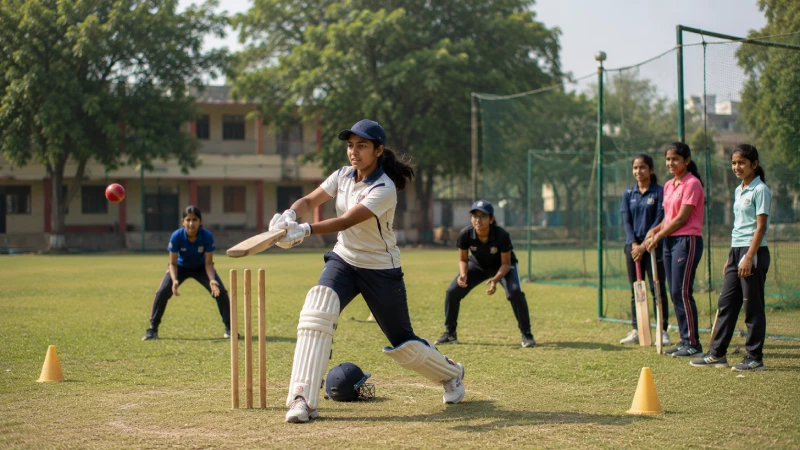
This drill brings a cricket related twist to interval running. Place two markers around 20–22 meters apart, kind of like the wickets. Sprint from one side to the other, ease down under control, turn cleanly and come back. After a brief recovery, repeat the pattern. If you want to make it tougher, rotate between different efforts, like:
- Fast singles
- Two run efforts
- Longer recovery periods
- Shorter recovery periods
The aim is to train the body to accelerate again and again, stop on command , and recover effectively.
4. Lateral Shuffle and Sprint
Fielders very rarely go just straight ahead . They kinda need to respond sideways first, before accelerating toward the ball, it’s all about that quick pivot energy. Put two cones about five meters apart, not more, shuffle sideways from the first cone to the other one, then straight away turn and sprint ahead for roughly 10 metros. Do four to six goes per side, and keep it smooth, don’t make it sloppy at the end. This drill mixes lateral movement with acceleration and it can build the agility you need when reacting to a shot.
5. T-Drill
The T drill is also a decent choice for building change-of-direction skill, and it feels oddly simple until you actually run it. Set four cones in a T shape. Begin at the bottom cone, sprint forward to the middle. Then shuffle sideways to one end, cross to the opposite end, go back to the center and sprint backward to the original position. First learn the pattern, then slowly raise the intensity, step by step.
6. Catch-and-Move Reaction Drill
Stamina isn’t only the heart pumping part, like cardiovascular endurance. Cricket also demands players to make choices while they are still in motion, and that’s the part people forget. Use a partner who stands several meters away and gives you a direction cue such as “left,” “right” or “forward.”
7. Cone Weave Sprint
Set up five cones about two meters between each one, like in a straight line. Then sprint through them while doing that weave, side to side, and at the end go into a straight-line acceleration, no messing around. Rest around 45–60 seconds before you do it again. This drill trains acceleration, deceleration and those quick directional edits while your heart rate stays up. You can also tweak it, for example by carrying a ball, or finishing with a throw at a target, something similar.
8. Burpee to Sprint Drill
If you want a tougher conditioning bit, you can mix a bodyweight movement with a sprint. Do five burpees right away then immediately go for a 15–20 meter sprint. Walk back, recover, and repeat. The shift from a floor-based action into a sudden explosive run is what makes it hard. Beginners might lower the burpees count, or swap them for bodyweight squats instead. Also, because fatigue shows up fast, stop the set if your sprinting form starts to slip, don’t just push through to “finish” more reps.
Conclusion
Cricket really asks for this specific mix of staying power, quick bursts of speed, agility and then the recovery stuff. People can be out there for long stretches, but the moment a chance shows up, they have to react straight away, no hesitation.
Things like shuttle runs, sprint intervals, wicket-running work, sideways shuffles, T drills, reaction based exercises and conditioning circuits can make stamina training feel less monotonous, and they also build movement qualities that are pretty close to what happens during actual cricket. The point is not only to last longer on your feet. It’s to be able to run, brake, pivot, reset and repeat while still holding onto enough energy and control to perform when the match suddenly asks for it.