
Indian festival food traditions: India’s festivals are more than bright, colorful celebrations, religious rituals, and all that joyful noise; they are also tightly connected to food. Across the country, each occasion comes with its own traditional dishes that mirror regional history, seasonal produce, and everyday family customs. Whether it is making sweets for Diwali, serving a big Sadya during Onam, cooking biryani for Eid, or sharing bhog during Durga Puja, food stays right at the center of the celebration, every single time.
These culinary traditions do more than fill plates. In many ways, Indian festivals show that food is not just nourishment. It becomes a kind of language, one that speaks love, hospitality, gratitude, and a real sense of belonging. As life gets faster and faster, these traditions still nudge people to slow down a bit and remember what matters, even if only for a day or a few evenings.
Food as the Heart of Indian Festivals
Food has always been kinda symbolic in Indian celebrations. Every festival brings its own set of dishes that hold cultural, religious, or seasonal importance. Ingredients are chosen with care, recipes get passed along generation to generation, and most meals are cooked with devotion more than just convenience or quickness. Festival cooking also ends up encouraging participation.
Family members split things up: someone kneads dough, another handles sweet-making, and children sometimes help by decorating serving plates or arranging ingredients. The kitchen turns into this lively spot where conversations move, stories are traded, and little memories are made, without anyone noticing time. A lot of families feel that making food together is just as important as eating it together.
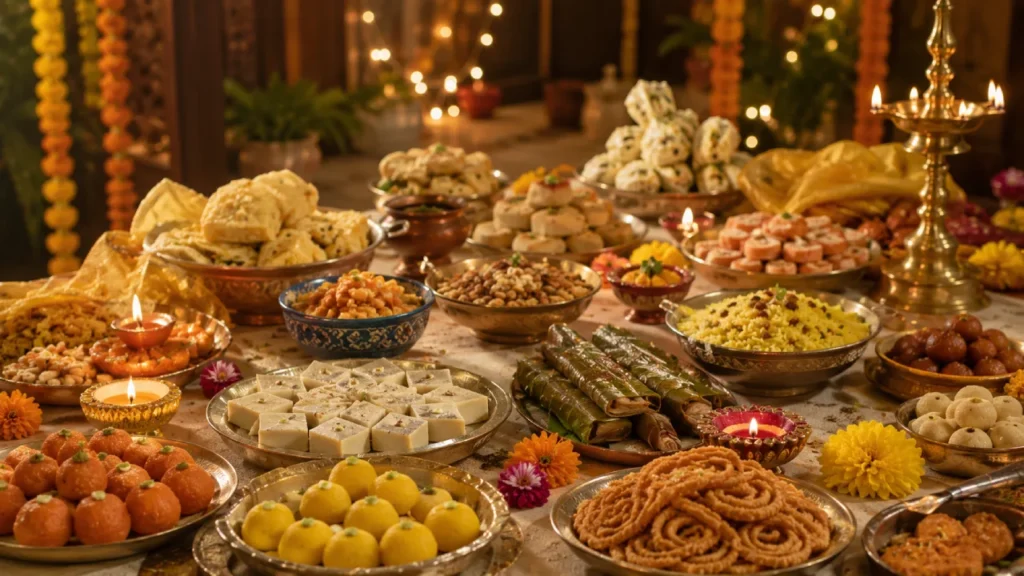
Diwali Celebrating Through Sweets and Snacks
Diwali, the Festival of Lights, is probably India’s most well-known celebration when it comes to food nd hospitality too.
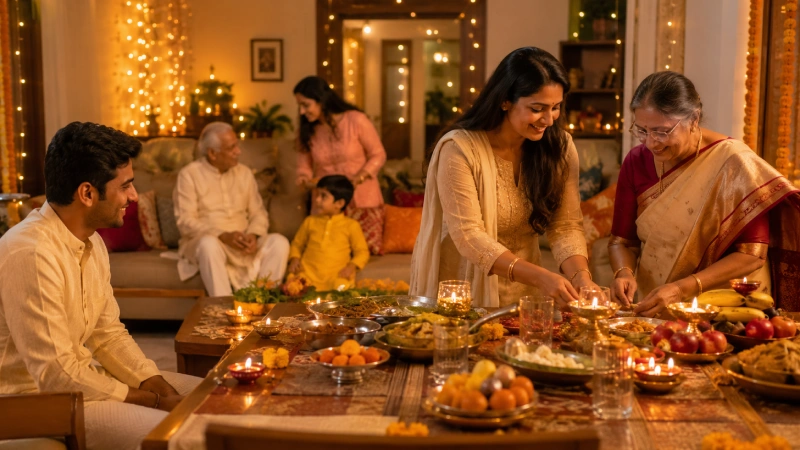
Preparations often start a few days earlier. In many homes, there’s this strong aroma of freshly prepared sweets and savory snacks. Many of these treats are made with recipes that families kept and protected over decades.
Some popular Diwali dishes include, and you’ll see them in many places
- Kaju Katli
- Besan Ladoo
- Motichoor Ladoo
- Barfi
- Chakli
- Shakarpare
- Namak Pare
- Gujiya (in several regions)
One nice tradition during Diwali is exchanging sweet boxes with neighbors, relatives, teachers, colleagues, and friends. These swaps help relationships stay warm, and they also show gratitude along with goodwill
Rather than only thinking about gifts, families often appreciate homemade sweets more, because they carry time, effort, and sincere affection wrapped into them.
Durga Puja Food That Brings People Together
In eastern India, especially West Bengal, Durga Puja is famous not just for fancy pandals, but also for its hearty food traditions.
One of the festival’s most touching moments is bhog, that sacred vegetarian spread which is offered to Goddess Durga first, and only after that it is served to thousands of devotees. Traditional bhog usually comes with things like
- Khichuri
- Labra
- Mixed vegetable curry
- Beguni
- Tomato chutney
- Payesh
During the celebrations, people from many backgrounds end up sitting side by side; they share the same meal, and it really shows equality, plus that community feeling that stays with everyone even after the drums quiet down.
Onam Sadya: Kerala’s big vegetarian feast thing
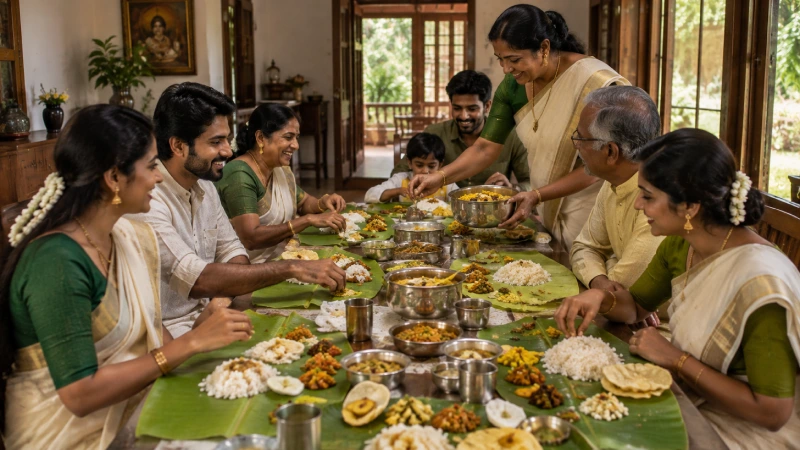
Kerala’s harvest festival, Onam, is well known for Onam Sadya, which is basically one of India’s grandest festive meals. Traditionally, it is served on banana leaves, and honestly, a Sadya can have more than twenty different dishes, lined up in a certain order, like it matters a lot. You might see some of these favorites there
- Sambar
- Avial
- Olan
- Thoran
- Pachadi
- Kaalan
- Rasam
- Pappadam
- Pickles
- Multiple types of Payasam
Making the Sadya often takes the combined effort of a few family members, so teamwork becomes a really important part of the whole celebration, and everybody kind of plays their small role.
Eid: sharing meals and a lot of compassion
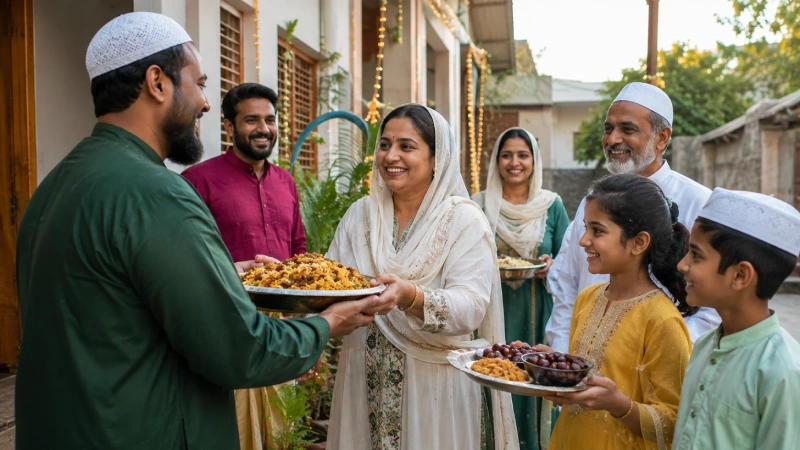
Honestly, Eid celebrations show pretty well how food can support family ties and community bonds too. Right after Ramadan, families get busy and prepare festive dishes like Sheer Khurma, Seviyan, Chicken Biryani, Mutton Biryani, Kebabs, Haleem, and Nihari.
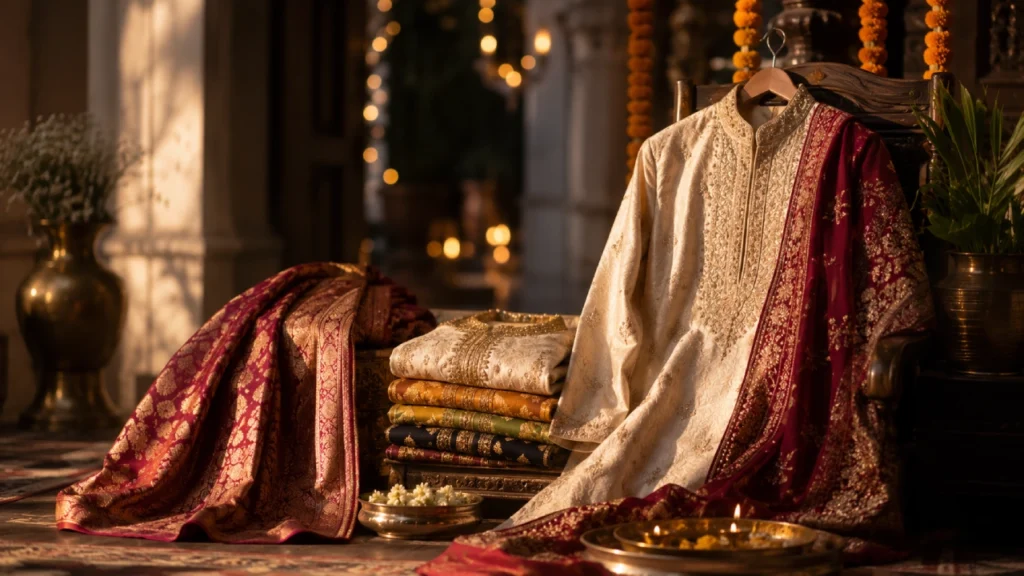
And then again, it’s not only about eating at home. Eid is just as much about sharing. Some families hand out meals to neighbors, relatives, friends, and also to people who really need it.
Pongal and Harvest Celebrations
Pongal, which is celebrated in Tamil Nadu, kind of honors the harvest season, and it also shows gratitude to nature and all that comes with it. This festival has a signature dish, and yes, it is also called Pongal; it is made by boiling freshly harvested rice with milk until it kinda overflows. That overflow is a symbolic gesture that means abundance, success, and prosperity,y like a quiet promise that things will be good.
During the celebrations, ns families usually prepare both Sweet Pongal and Ven Pongal. And the whole setup also includes sugarcane, coconut, seasonal vegetables, plus a mix of traditional snacks that people share.
Baisakhi and Lohri: Celebrating Prosperity-ish
In Punjab, harvest festivals are usually about simple meals made from whatever is growing nearby, not anything too fancy. Still, the flavors feel really hearty, like comfort in a bowl sort of thing. Some of the best festive favorites are
- Sarson da Saag
- Makki di Roti
- Kheer
- Gajak
- Rewari
- Til Ladoo
People eat all of this while music plays, folks dance around, bonfires glow, and everyone meets together in the community; it all feels joyful and full of thankfulness for a successful harvest.
Christmas Across India
Christmas celebrations in India show both worldwide influences and local, food-related habits. In many homes, people prepare such things as:
- Plum Cake,
- Roast Chicken
- Cutlets
- Vegetable Stew
- Kalkals.
- Rose Cookies
- Homemade Biscuits
Sometimes, families bake together; neighbors swap cakes and little holiday bites no matter the faith.
Conclusion: Indian festival food traditions
Indian festival food traditions are way more than a pile of regional recipes; they feel like living celebrations of family, culture, generosity, and togetherness, kinda in that shared way. Each festive meal, even the smallest ones, carries a story of shared roots and heritage, bringing different generations together while also quietly strengthening bonds inside families and communities.
So whether you’re enjoying Diwali sweets, a detailed Onam Sadya, Durga Puja bhog, Eid delicacies, or even those harvest feasts, the food really sits at the center of India’s celebrations. Also, in a world that keeps moving faster and faster, these traditions still manage to give people little pockets of connection that stretch past the dining table.