
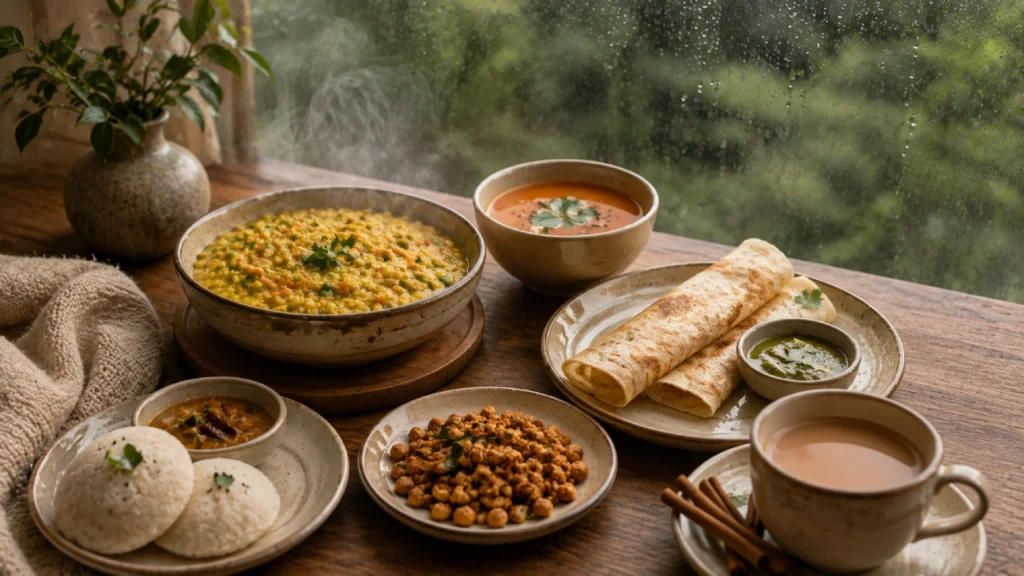
There is something about rain that changes the way food feels, honestly. The first heavy shower of the season can make a simple cup of chai seem way more soothing, while the sound of rain against the window, usually makes me reach for something warm and crisp and spicy, or just a little indulgent. Monsoon comfort food in India always had that emotional pull. From pakoras and bhajiyas to khichuri, soups and hot cups of tea, rainy days invite meals that feel comforting, not just functional, like the body already knows what it wants before we even decide.
But comfort food does not have to turn into “no balance.” The modern way to eat during monsoon is less about giving up your favourite stuff and more about assembling meals carefully. A plate of hot khichuri can be more nourishing when you add vegetables, and dal too. Pakoras can stay as a special treat rather than a daily snack. Even a bowl of soup can become a full meal when it has protein and whole grains with it.
This balance is especially helpful in the monsoon, because during that time food hygiene, digestion, hydration, and overall nutrition really do deserve extra attention. Homemade, freshly prepared food is usually a safer bet in the rainy season, since food- and water-borne illness risks can get higher.

Why Comfort Food Feels Different In The Monsoon
When the rains come, everyday rhythms just slow down. People end up staying indoors more, the air feels cooler, and then those familiar kitchen smells kind of hang around, like part of the day itself. Food has this emotional layer that’s hard to switch off. A bowl of dal-rice, a plate of khichuri, or even a cup of ginger tea can take someone back to childhood afternoons, family kitchens, or rainy evenings where you watch the sky from a balcony, kind of quiet and half-dreaming.
That emotional link doesn’t have to vanish just because someone wants to eat better.
So the point is to make comfort food feel more finished, in a practical way. You mix in carbohydrates, protein, vegetables, healthy fats, and fluids when it makes sense. Then you get meals that feel satisfying, without depending only on deep-fried cravings and oily snacks.
Bhuna Khichuri: the Ultimate Rainy Day Classic
Not many dishes feel like they belong to the Indian monsoon as much as khichuri, or khichdi.
In Bengal, bhuna khichuri kind of hangs around rainy afternoons, you know, the sort where the sky stays low. It’s made with rice, roasted moong dal, ghee, and fragrant whole spices, so it ends up more deep tasting and aromatic than the lighter everyday versions. Traditionally, you’ll find it matched with begun bhaja, papad, or even ilish during the monsoon.
If you want something a bit more balanced for regular days, the khichuri can quietly welcome vegetables like carrots, peas, spinach, beans, or bottle gourd. The rice and lentils bring carbs and plant protein, while the vegetables add fibre along with those little micronutrients you almost forget about.
Also, even a small spoonful of ghee can give flavour, without pushing the whole thing into “too rich” territory. The final bowl is still comforting, but it’s also more nutritionally complete, in a real way.
Pakoras, Bhajiyas and the Art of Moderation
Like, no monsoon food talk is finished without pakoras.
On a rainy evening, crispy onion potato spinach paneer or mixed vegetable pakoras with hot chai can be, well hard to refuse. And honestly, there’s no need to delete them from a balanced lifestyle just because they’re fried.
What matters is how often, how much, and how they’re prepared. Instead of treating fried snacks as the main character in every rainy day meal, they can become occasional little treats alongside a lighter plate. Homemade versions help too, because you can actually manage ingredients, oil levels, and cooking conditions. Air frying, or shallow frying, can work for people who want less oil, though the taste and texture will not be the same as deep frying, not completely.
So a small plate of pakoras with mint chutney and tea can stay exactly that, a satisfying monsoon snack, not something that has to be stamped as either “healthy” or “unhealthy.”
Warm Soups That Really Hit the Spot
Soup is totally a natural fit for rainy weather, but honestly a bowl of clear broth alone might not always be enough, to feel like you’re done.
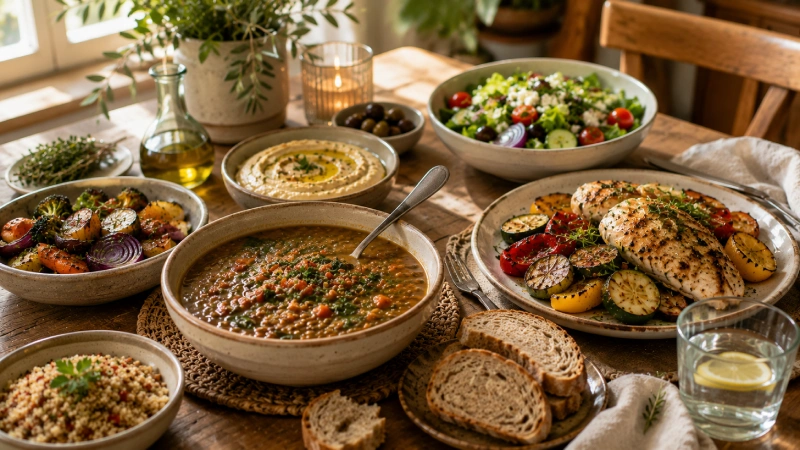
If you want something more monsoon-proof, you can mix vegetables with some real protein. Like chicken and vegetable soup, lentil soup, tomato soup with paneer or beans , or even a mixed-vegetable soup with tofu can keep you satisfied longer.
And then there’s the veggie side of it: add sweet corn, carrots, spinach, mushrooms, beans, or pumpkin, so the bowl feels like it has more layers, not just “something warm”. For a fuller dinner, you can pair soup with whole-grain toast or a small portion of rice millet roti, or any other carbohydrate source that works for you.
That way, you get the warmth people crave in the rain, without dinner turning into something overly heavy.
Dal, Rice and Seasonal Vegetables
Sometimes the most comforting meal is also the most simple and effortlessly so.
A bowl of dal with steamed rice plus a vegetable preparation can give you a satisfying combo of carbs, protein, and fibre. Add seasonal vegetables like pumpkin, bottle gourd, spinach, carrots, or beans, and suddenly it feels more interesting, less repetitive.
If you want something lighter, you can adjust the rice portion depending on your hunger, while keeping a bigger serving of dal and vegetables.
This approach also matches an important idea in balanced Indian cooking: comfort doesn’t always need elaborate recipes.A warm home-cooked meal can be deeply satisfying, precisely because it feels familiar.
Steaming Hot Dosas and Idlis
South Indian comfort foods also work beautifully during the rainy season, you know, somehow they just fit. Freshly prepared idlis with sambar give you a soft warm kind of meal, while dosa brings that satisfying crisp texture without always going the deep frying way.
Sambar mixes lentils with vegetables, so it becomes a handy side for dosa or idli, not just something on the plate. Coconut chutney is also nice alongside it, for flavor and those healthy fats that make the whole thing feel more rounded.
If you want something a bit more filling, a vegetable-filled dosa or a larger serving of sambar can make the plate feel better balanced, like it’s more complete. The key distinction though is between freshly prepared food and snacks that have been sitting out there, exposed for long stretches of time.
Chai Without Making Every Break About Snacks
Tea is honestly the unofficial drink of Indian monsoons. Ginger chai, masala chai, cardamom tea and even simple milk tea all carry that familiar rainy afternoon vibe. The whole ritual can be comforting , especially when you share it with family or friends.

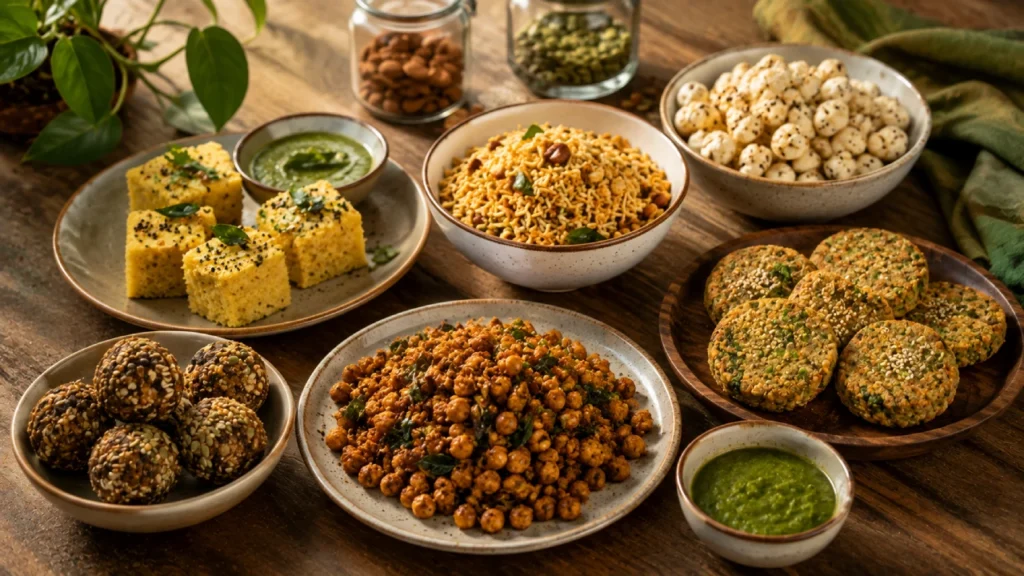
The real issue usually shows up with what goes with the tea. Instead of automatically pairing every cup with biscuits, namkeen, or some fried snack situation, a few tea breaks can include roasted makhana, nuts roasted chana, fruit, or even homemade snacks.
There is still space for biscuits and pakoras, sure. The point is more like variety rather than letting highly processed, fried accompaniments become the default choice every single time.
Corn, Sweet Potatoes and Other Easy Snacks
Rainy weather is a good time to revisit those simple snacks, you know just like before.
Roasted corn with lemon and spices, boiled sweet potatoes, roasted chana, steamed sprouts, or even a small bowl of makhana can give satisfying textures, without needing an elaborate setup. They also come in handy in the afternoon, when hunger shows up between meals, almost out of nowhere.
A snack does not have to look like standard “diet food” to fit into a balanced routine. Common Indian ingredients can often bring that mix of comfort and nourishment people are really searching for.
Add Protein so Comfort Food Feels More Complete
One of the simplest ways to make comfort meals a bit more balanced is to think about protein.
For example, a vegetable soup can include lentils or beans. Khichuri already has dal, but adding more vegetables gives a wider nutritional variety, somehow everything feels better.
Dosa goes well with sambar, and rice can be accompanied by dal, fish, chicken, paneer or tofu depending on what you prefer to eat.Protein helps meals feel filling, and when you pair it with vegetables plus a carb base you basically end up with a more complete plate.
This is especially helpful for people who tend to snack again and again, when meals leave them hungry pretty quickly afterward.
Hydration Still Matters Even When It Rains
When it’s raining, it’s kinda easy for many people to forget hydration, or at least not think about it as much. The air can feel cooler than in summer, so thirst might seem less obvious. But still, getting enough fluids is important, especially when the humidity stays high.
Water should stay the main choice, plain and simple. Soups, dal, and other water-rich foods can also help, sort of adding to your overall fluid intake, without people really noticing.
Tea and coffee can fit into the day, but they do not have to take over completely, because water is still the baseline. Keeping a reusable bottle nearby can make small, regular sips more natural, even if the weather doesn’t feel scorching.
Being Careful About Food Hygiene
Monsoon comfort food is great, but it also needs extra attention to cleanliness. In the rainy season, contaminated water and food that’s stored the wrong way can raise the risk of food-borne illness. That’s why fresh-cooked meals, clean drinking water, proper refrigeration, and ingredients that are thoroughly washed matter a lot.
Street food isn’t automatically unsafe, still, it’s smart to choose vendors who keep visible hygiene habits, and who serve items freshly cooked, piping hot and handled with care.
At home, leftovers should be stored properly, rather than being left at room temperature for too long.
A Balanced Monsoon Plate
The simplest way to think about monsoon meals is to build around what you already know , rather than trying to completely swap your eating habits out.
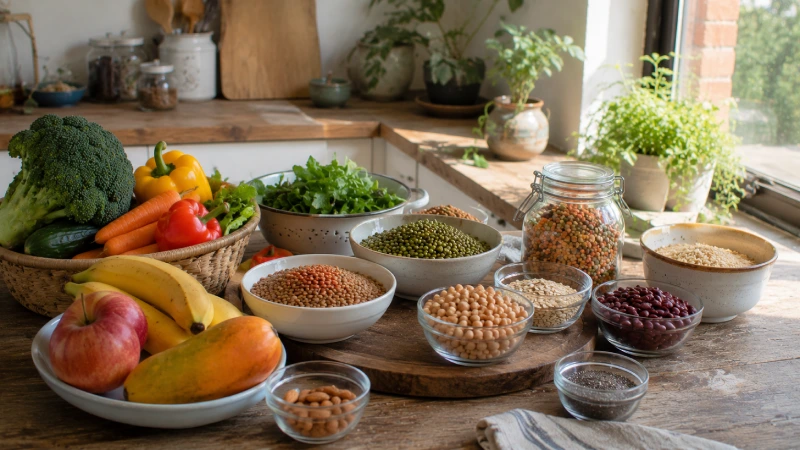
Like, a balanced rainy day plate might include:
- A carbohydrate: rice, roti, dosa, idli , poha or millet
- A protein: dal, beans, paneer, tofu, eggs, fish or chicken
- Vegetables: seasonal cooked vegetables, greens , or vegetable based preparations
- A little fat: ghee, nuts, seeds or cooking oils in sensible quantities
- A comforting element: chutney, pickle, papad, a small fried snack, or a favourite cup of chai
With this approach, there’s still plenty of room for pleasure, without making every meal excessively rich , all the time.
Conclusion
Monsoon food does not need to choose between comfort and balance.
The rainy season can still mean hot khichuri, crispy pakoras, ginger chai, creamy soups, roasted corn , and those comforting bowls of dal-rice. The real difference is more about how these foods fit into the bigger meal, and your eating pattern overall.
For example, a plate of bhuna khichuri can be made more nourishing with vegetables.
Pakoras can stay an occasional treat , nothing more, nothing less. Soup can become a full meal with protein, and tea can be enjoyed without turning every break into a fried snack ritual.
Ultimately, balanced monsoon eating is less about restriction and more about awareness.
It is about enjoying the foods that make rainy days special , while also giving the body the nourishment, hydration and care it needs.
Because some of the best parts of the monsoon are not really in those elaborate wellness trends, but in a warm bowl of familiar food, a cup of tea by the window, and the simple pleasure of eating slowly while the rain comes down outside.