

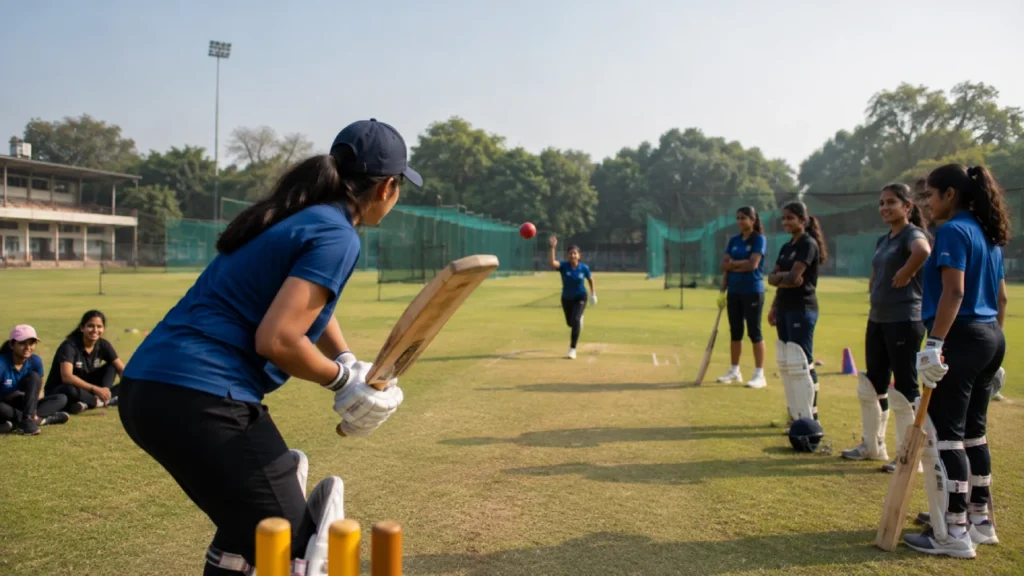
Women’s cricket has emerged as one of the fastest-growing sports in the world. Over the last decade, it has transformed from a niche liking into a global sensation, attracting millions of fans worldwide. Elite athletes, extraordinary performances, international tournaments, and sold-out stadiums have elevated the perception of women’s cricket.
Young girls are no longer enjoying sports as fans. They are trying out for their school teams, joining academies, and even representing their country on the international stage. The success of cricket players from Australia, India, and the United Kingdom has sparked immense interest among young girls.
Beyond the excitement of the game, it is also advocating for young people to shift towards healthier lifestyles that allow them to stay physically active and build confidence and discipline. This shift may be interpreted as a token of the generation’s participation and their values regarding self-belief, equality, health, and career prospects.
The Rise of Women’s Cricket Around the World
Women’s cricket has existed for a long time, despite historically lacking the recognition it deserved. Matches attracted limited audiences; sponsorship opportunities were sparse, and a professional career in women’s cricket felt like a distant dream to the majority of young women.
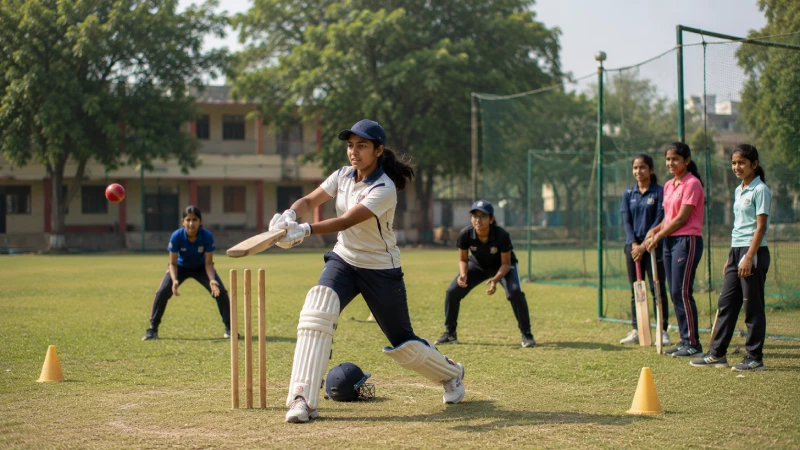
Today, the same sphere is radically different. The launch of India’s Women’s Premier League (WPL) in 2023 marked a major milestone for the sport. Similarly, Australia’s Women’s Big Bash League (WBBL) and England’s competitions such as The Hundred Women’s competition and the Women’s Vitality Blast have helped strengthen domestic cricket while drawing international audiences.
Women Cricketers Who Are Inspiring Young Athletes
Role models are a crucial component of any sport. Cricket was dominantly viewed as a male-centric sport before these females successfully challenged that perception.
India’s women’s national cricket team, nicknamed the Women in Blue, has shown fearless leadership under its current captain, Harmanpreet Kaur. The team’s vice-captain, Smriti Mandhana, is also celebrated for her gameplay. Other contributors to the team include cricketers like Shafali Verma, Deepti Sharma, Jemimah Rodrigues, and Richa Ghosh, who have inspired young girls through their relentless grit and world-class achievements.
Australia has produced several of the greatest women cricketers in history. Ellyse Perry is respected worldwide not only for her cricket achievements but also for her earlier representation of Australia in football. Players like Alyssa Healy, Beth Mooney, Ashleigh Gardner, and Annabel Sutherland continue to shine with outstanding performances.
In the United Kingdom, the current captain of the England women’s cricket team, Nat Sciver-Brunt, and cricketers like Heather Knight, Sophie Ecclestone, Tammy Beaumont, and numerous other trailblazers have shifted the trajectory of women’s cricket and rewritten possibilities.
The Difference Between Women’s and Men’s Cricket
While women’s cricket is actively evolving, there are still several basic differences between men’s and women’s cricket.
Men’s cricket has undergone professional development for much longer than women’s cricket. Therefore, their larger audiences have consequently contributed to the commercial investments. This naturally gives men’s tournaments higher revenues, larger sponsorships, and bigger prize pools.
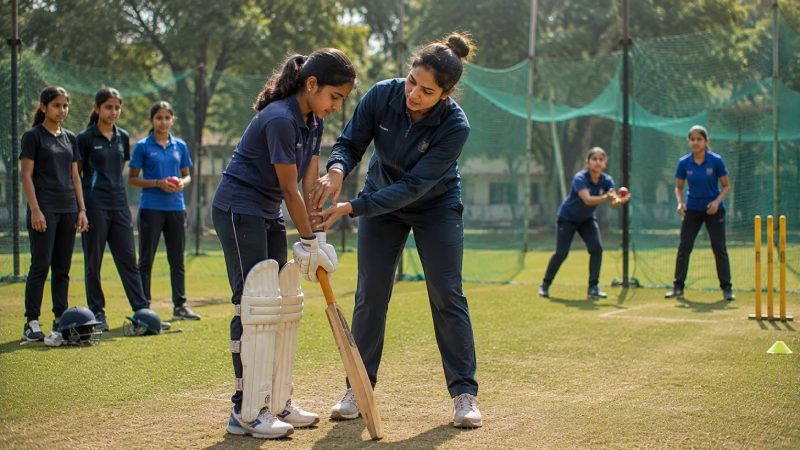
Women’s cricket, on the other hand, has taken a comparatively bigger leap in a shorter span of time through steady growth over the years. Stadium attendance, television viewership, and sponsorship deals have increased significantly over the last decade.
With investments increasing, the gap between men’s and women’s cricket is shrinking by the day.
Benefits Of Cricket Beyond The Professional Sphere
For women who are not aspiring to become professional athletes, indulging in sports like cricket still upholds a distinct competitive edge. Globally, many schools, colleges, and universities reserve seats under sports quotas for students with recognized sporting achievements. This gives women athletes the choice to pursue both their athletic and academic careers simultaneously, while being provided with scholarships, fee concessions,s better training facilities, and other benefits.
Even if individuals ultimately decide not to pursue an athletic career later in life, their achievements remain invaluable. In hiring, employers and organizations often show a preference for candidates with sports backgrounds. The skills developed through sports, such as teamwork, discipline, consistency, leadership, and time management, come in clutch in all sorts of employment opportunities. Sports help students develop resilience and performance under pressure, both of which are equally useful in jobs.

Women’s Cricket Reflects the Aspirations of Today’s Generation
The popularity of women’s cricket reflects the changing attitudes of the youth. Today’s generation deeply values their physical fitness and mental well-being, which they achieve by maintaining an active lifestyle. In an era ruled by sedentary routines and technology-centric lives, sports offer a universally accessible, vibrant, and genuinely enjoyable leisure activity that may be a suitable alternative to monotonous workouts.
Girls today are growing up while seeing women successfully thrive in various spheres, including sports. Their role models are inspiring them to compete at high levels, which is understandably leading to this remarkable influx of young women’s participation in cricket and similar sports.
Women’s cricket also conveys important values such as equality, perseverance, talent, and hard work. This helps eliminate the ingrained gender bias that has manifested in stereotypical male-dominated fields to allow women to take up rightful space and succeed in their own accord.
Conclusion
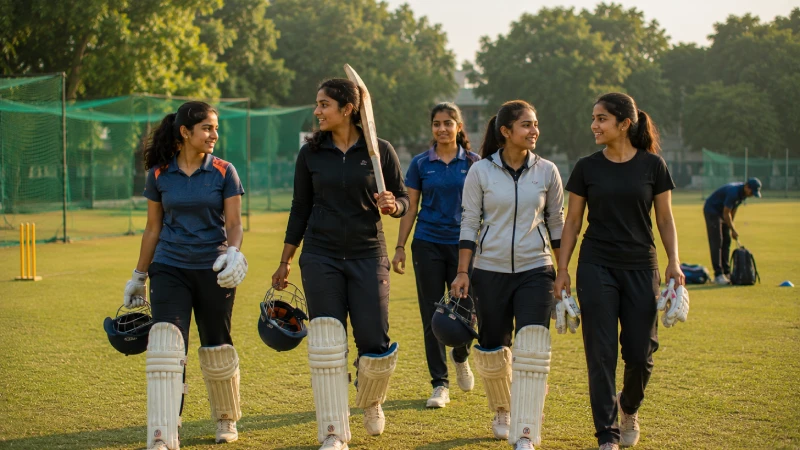
Women’s cricket has grown into something much more than a sport— it is a symbol of the increasing equality of opportunity and an emblem of confidence for women worldwide. Increased media coverage and social media have surely made women’s cricket popular and mainstream, sparking a discourse about the course of its journey. Players are inspiring young girls to take up sports as a leisure pursuit or a proper profession, showing that women can do both.
There is still a long way to go for women’s cricket. With youth development, greater investments in domestic leagues, and expert mentorship, the future of women’s cricket looks bright. While men’s cricket has remained commercially well-established for decades, women’s cricket has managed to still build its own unique identity and continues to inspire leadership, equality and resilience, both as elite athletes and individuals.